
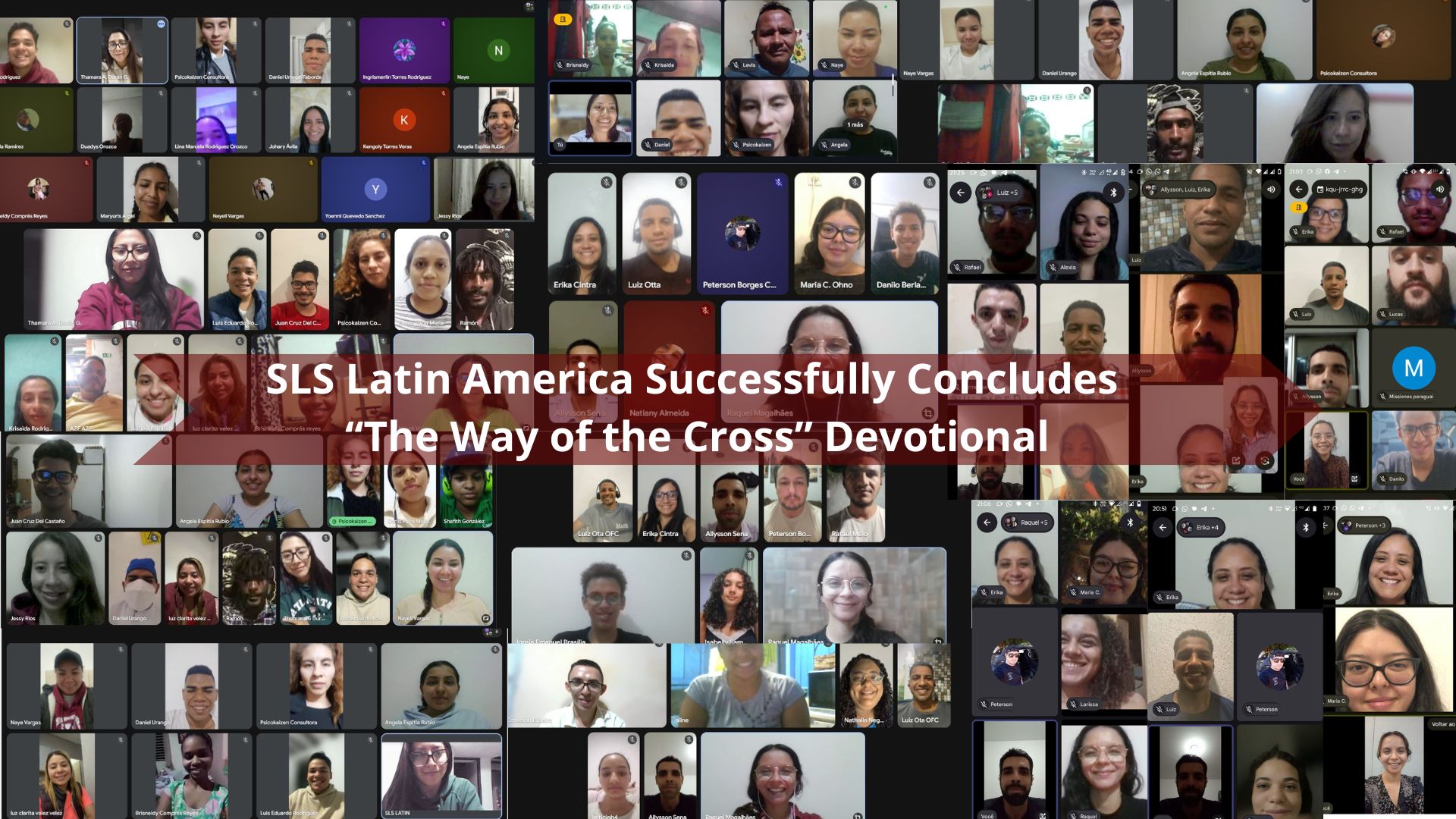
The Saint Luke Society (SLS) in Latin America recently concluded its regional Way of the Cross devotional, a spiritual initiative held throughout March and April for young people and students in the health sciences. The program left a lasting impression on participants, fostering meaningful reflection and spiritual growth across the region.
The devotional was promoted through digital posters and the “40-Day Challenge” WhatsApp group, which served as a dynamic space for communication, encouragement, and mutual support. This platform helped sustain engagement and build a sense of community among participants from various Latin American countries, all united by a shared commitment to deepen their faith.
Designed to accompany students in their spiritual journey, the devotional invited participants to reflect daily on the sacrifice of Jesus Christ and the call to follow Him in every aspect of life. Each day included a selected Bible passage, a contextualized teaching, and a prompt for personal reflection. The content emphasized the person of Jesus—His obedience to the Father, His unconditional love, and His self-sacrifice for humanity.
In its final phase, participants meditated on John 19, a pivotal chapter recounting Jesus’ final moments before His crucifixion. This reflection highlighted Christ’s enduring love, service, and forgiveness even in the face of profound suffering, offering a powerful model for participants’ own lives and vocations.
A distinctive feature of the initiative was its bilingual format. Teachings were provided in both Spanish and Portuguese, enabling active participation from students across the region, including Brazil. This approach strengthened inclusivity and reinforced a sense of spiritual unity and shared purpose among diverse communities.
Conclusion
The Way of the Cross devotional stands as a testament to SLS Latin America’s commitment to nurturing the spiritual lives of students in the health sciences. By integrating faith, reflection, and community, the initiative not only deepened participants’ relationship with Christ but also encouraged them to embody His compassion and service in their future professional practice. As the program concludes, its impact continues to resonate, inspiring a new generation to live out their faith with purpose and dedication.